Psalm Without Words
for full orchestra. 9’
Psalm Without Words consists of seven sections, mostly long single phrases:
I. Penitential Lament
II. Hope-tinged Lament
III. The Arm of the Lord
IV. Archangelic Lament (w/ sixfold seraphim wingswirls). In the book of Enoch, the archangel Michael is given the epithet “Long Suffering,” because his capacity to weep is greatest among them. For this he has the highest rank. Uriel has great gifts of love, but there are things even Uriel cannot bear. In contrast to the human tears of the first two sections, Michael’s tears gain strength from their deeper, surer roots in eternity. Michael's name means “who is like God?”, which was his rebuke of Lucifer. However, as Enoch explains, Lucifer was not the only angel expelled for misdeeds — there were at least two hundred others, and Michael weeps for them as well, even considering God's punishments too harsh. His voice is carried by the trombone.
V. The Soul-Forge. This section is based on the rhythm of nail-driving at construction sites, taught to me by a friend who has worked on many of them.
VI. Forlornness at the First Earth’s Vanishing. The quote from Revelation — “And God shall wipe away all tears from their eyes” is well-known for its comforting power, and is often read at funerals. But taking the verse in context reveals that heaven and earth must pass away first. No matter how troublesome, this world is all we know, and even its griefs and toils are dear to us. Thus, even deliverance from suffering creates a pang of loss.
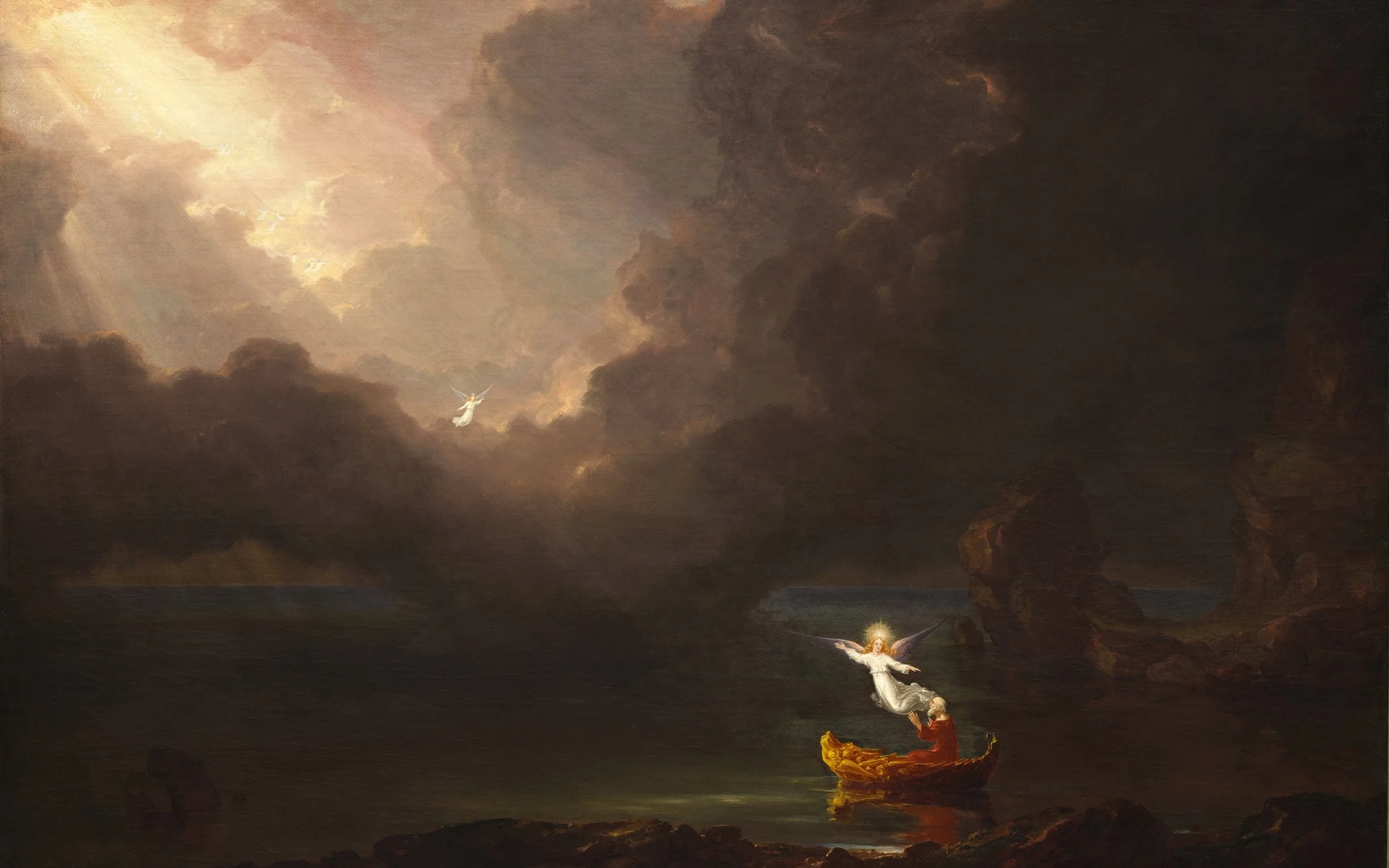
VII. The Sounding Shallow. According to various traditions, there is a shining lake in heaven, on the shore of which stands the City of God. In one text, the visionary traverses the lake on a golden ship. The ending of my piece depicts this scene. The lake is deep, but very still.
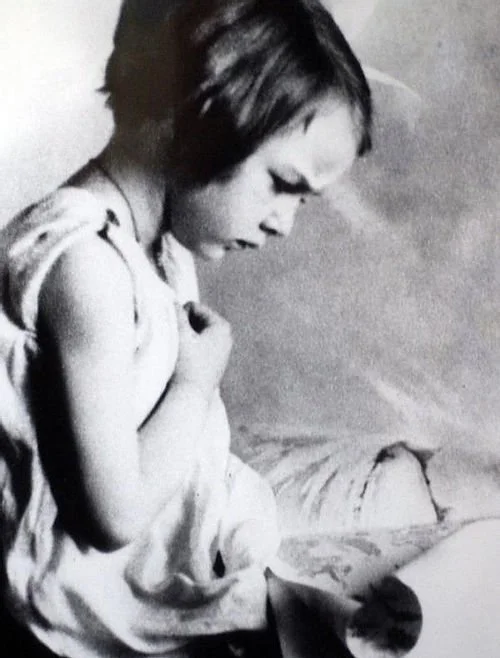
Photo credits:
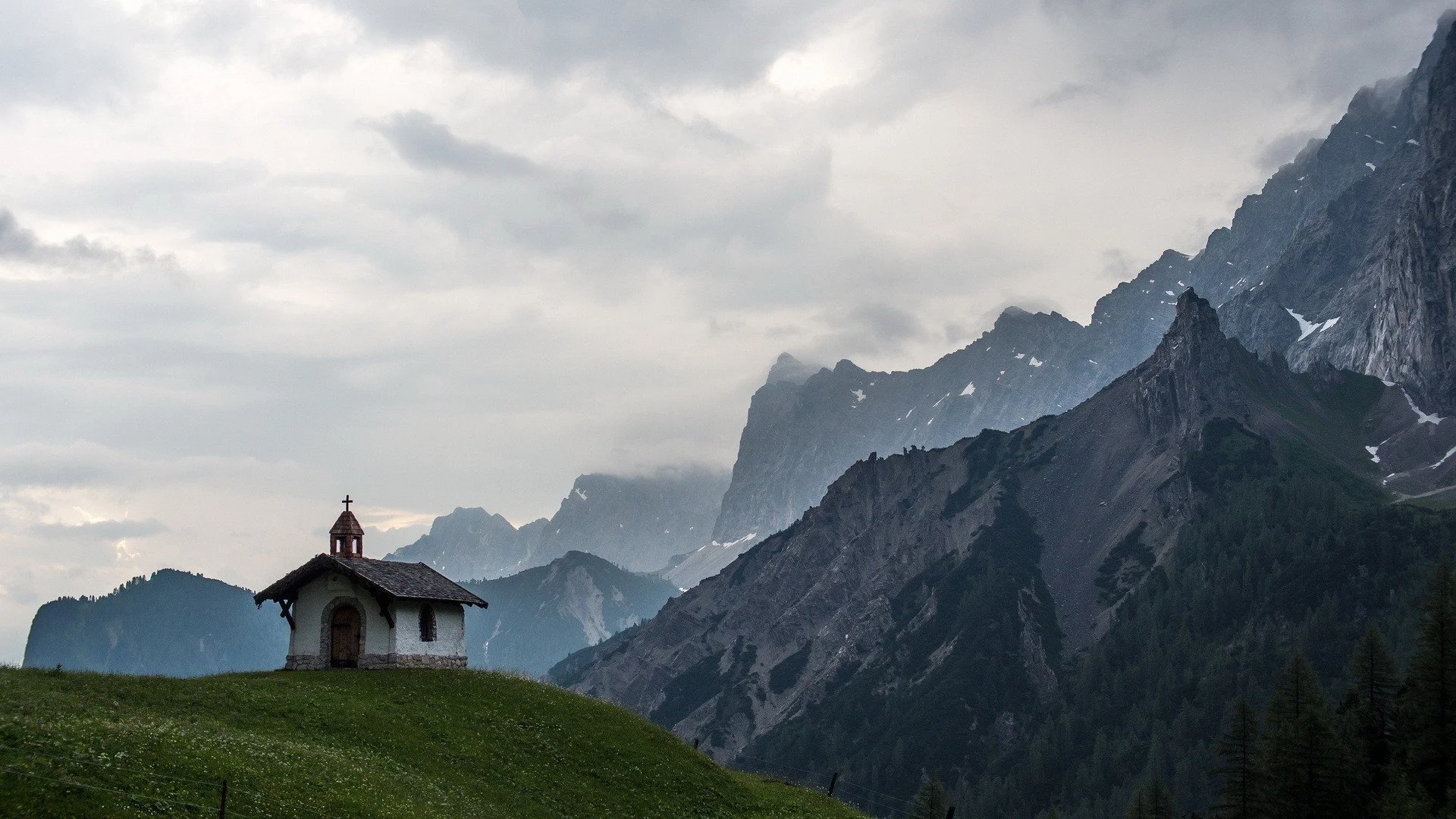
Kohleralm Chapel
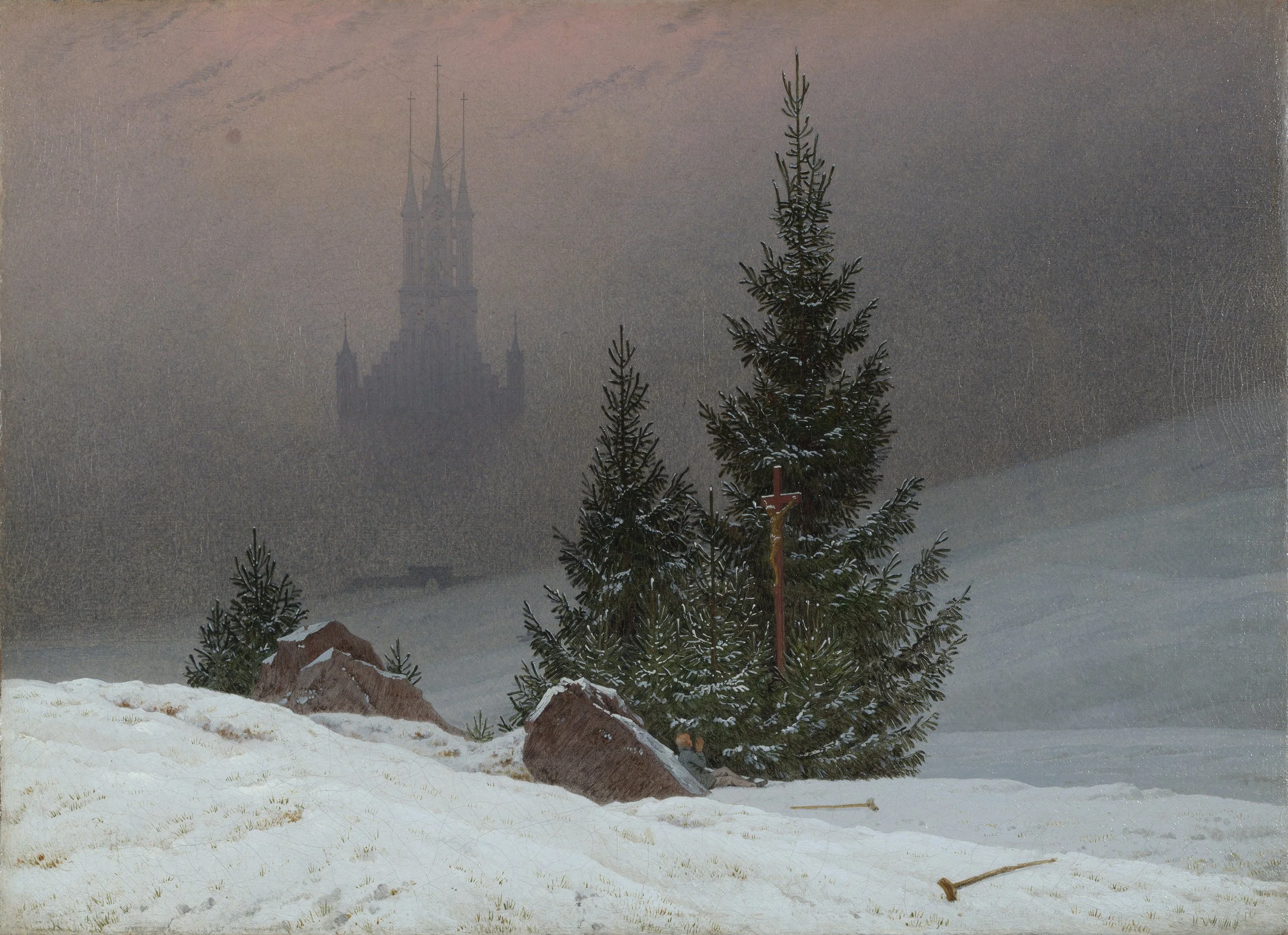
Friedrich, Caspar David, “Winter Landscape with Church”
Thomas Cole, “The Voyage of Life (Old Age)”
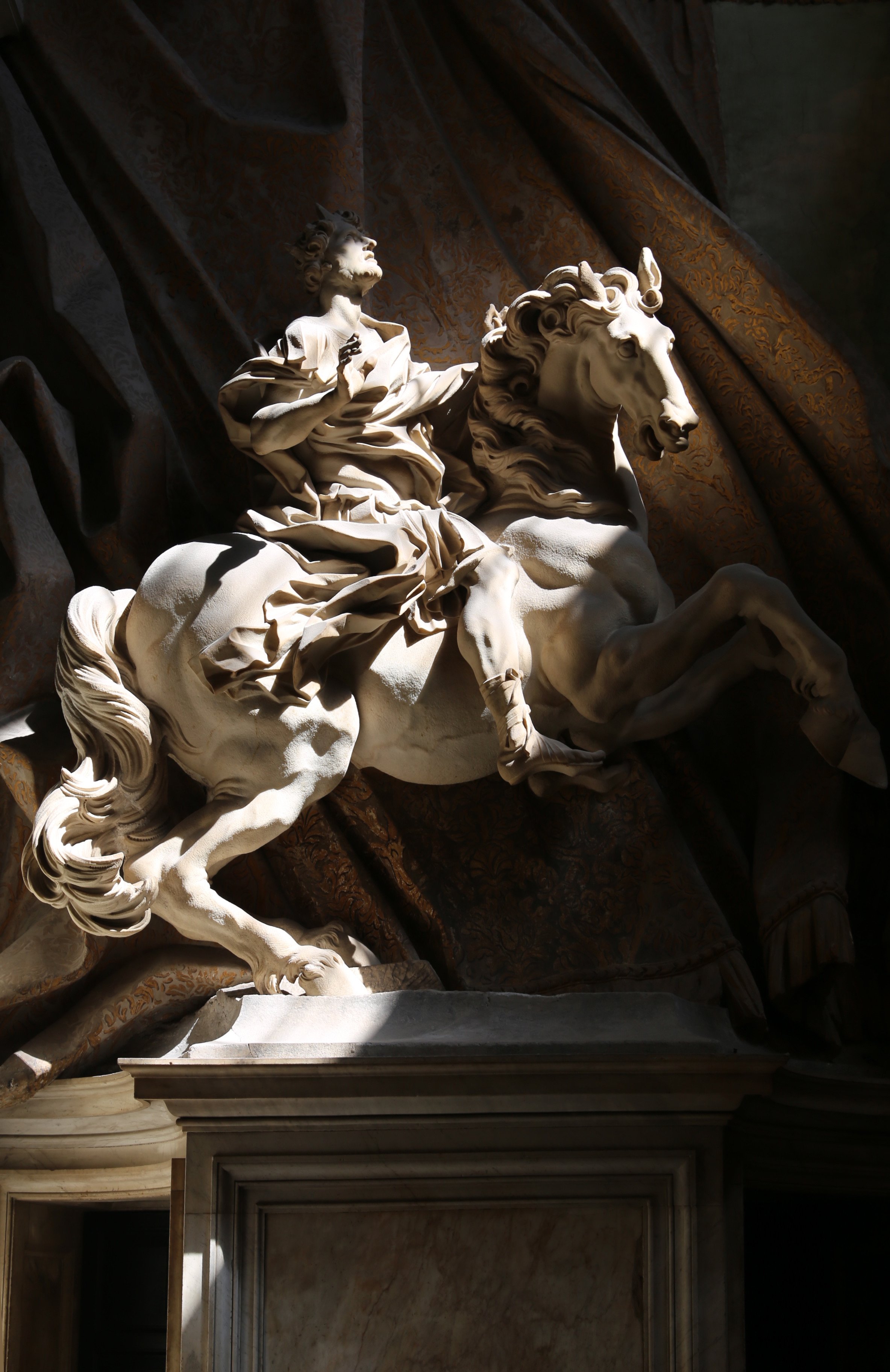
Gianlorenzo Bernini, “The Vision of Constantine”
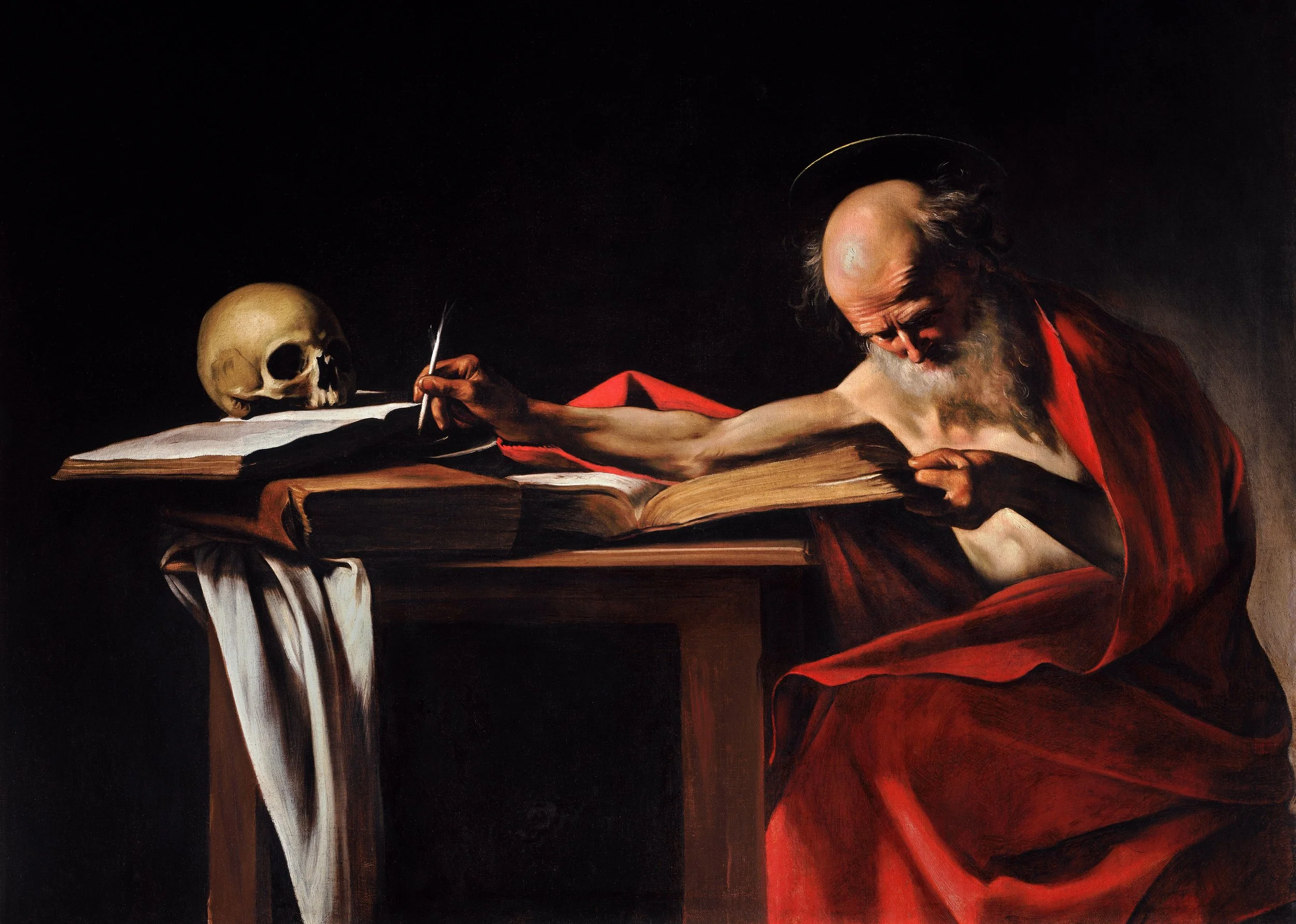
Caravaggio, “St. Jerome”
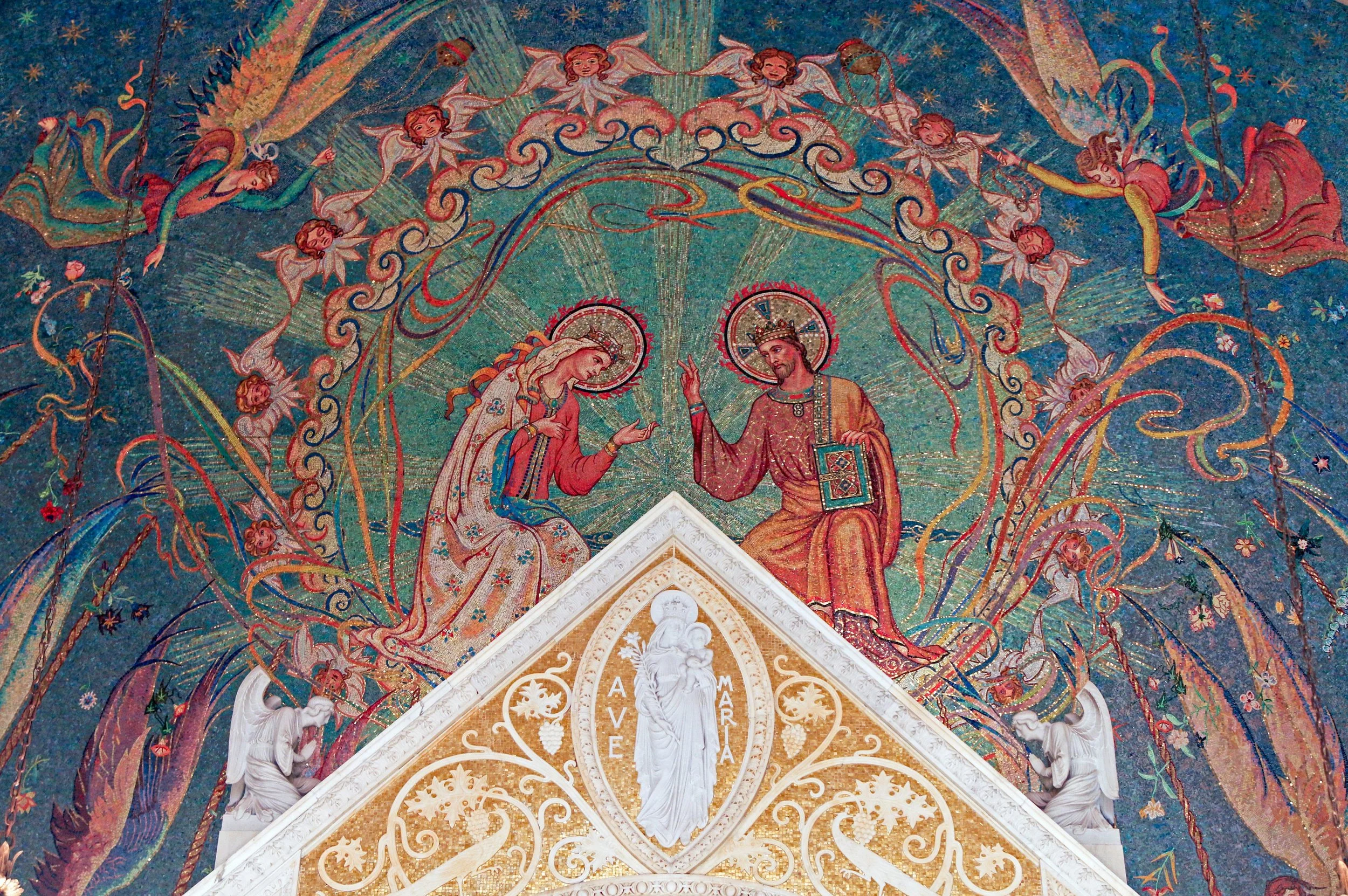
Our Lady Mosaic (Trinity Washington University, Notre Dame Chapel Apse)
Flannery O’Connor as a child